
How Amba Brought Down Bhishma Against All Odds?

The Mahabharata, one of the greatest epics of ancient India, is not merely a tale of war and kingship—it is a profound journey through human emotions, destiny, and dharma.
Within its tapestry lies the tragic and transformative story of Amba, the princess who defied her fate, battled divine injustice, and was reborn to fulfill a single mission: the fall of Bhishma, the grand patriarch of Hastinapura.
This is not just the story of vengeance—it’s a saga of love denied, honor shattered, and a rebirth destined for justice.
Kashi Svayamvara: The Beginning of a Storm
Amba, the eldest of the three princesses of the Kingdom of Kashi, was prepared for her svayamvara—the ancient ceremony where a bride chooses her groom from among the assembled suitors.
Secretly, Amba had already chosen her beloved: King Salva, a valiant ruler of the Salva Kingdom. Her heart was his, and her decision was made—she would place the varmala (garland) around his neck.
But fate had other plans.
Unbeknownst to Amba, Bhishma, the stalwart protector of the Kuru throne and a warrior of unmatched strength, had set out to secure brides for his step-brother, Vichitravirya.
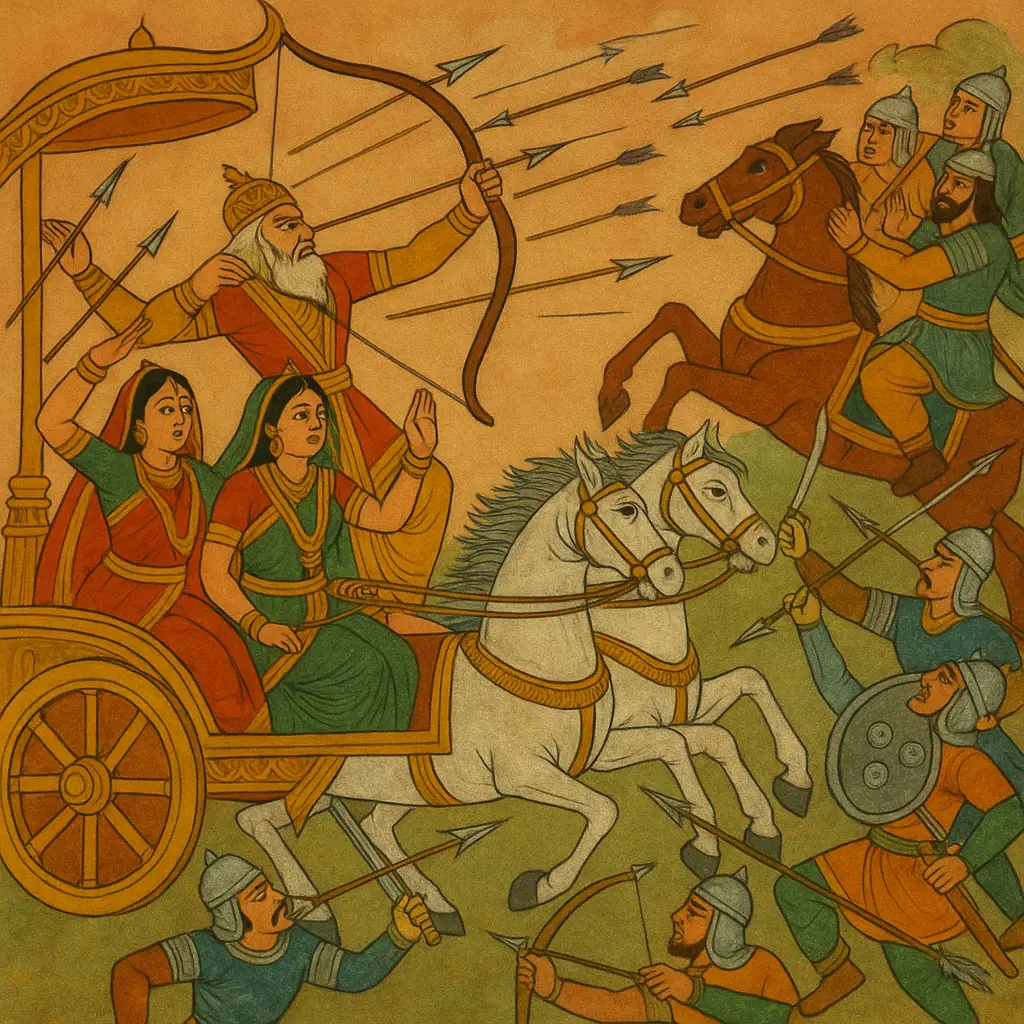
Bhishma stormed into the ceremony, challenged all the kings, and declared that he would take the three princesses by force if none dared to oppose him. True to his vow and valor, Bhishma defeated the suitors, including Salva himself, and abducted Amba, Ambika, and Ambalika in his chariot.
Love Betrayed: Rejection by Salva
Upon reaching Hastinapura, Bhishma presented the princesses to Satyavati, the queen mother. It was then that Amba confessed her love for Salva and revealed that she had intended to marry him. Recognizing her truth and her right to choose, Bhishma graciously sent Amba back to Salva, hoping to correct the injustice.
But Bhishma had unknowingly wounded Salva’s pride.
Humiliated by his defeat and Bhishma’s dominance, Salva refused to accept Amba. He accused her of having willingly gone with Bhishma and considered her tainted. His heart hardened by ego and societal codes, Salva denied Amba’s plea. For Amba, it was a second betrayal—first by fate, then by the man she loved.
Silent Refusals: Bhishma and Vichitravirya
Shattered but not defeated, Amba returned to Hastinapura and sought Bhishma’s help again. She hoped that perhaps she could still be accepted by Vichitravirya. But the young prince refused, stating he could not marry a woman who had already declared love for another.
Desperate, Amba turned to Bhishma and pleaded with him to marry her. But Bhishma, bound by his sacred vow of celibacy, could not comply. With no place to return to, no man to marry her, and no justice to anchor her dignity—Amba was now alone, consumed by the fire of vengeance.
Warrior Sage Intervenes: Battle Between Parashurama and Bhishma
Determined to right her wrongs, Amba turned to the ascetics and sages, seeking counsel. One of them, the sage Hotravahana, her maternal grandfather, advised her to approach Parashurama, the fearsome warrior-sage and teacher of Bhishma. When Parashurama heard her tale, he was incensed.
He summoned Bhishma and demanded that he either marry Amba or face battle.
Bhishma, though reverent to his guru, held fast to his vow. Unable to accept either option, the two titans engaged in a cataclysmic battle that shook the heavens. For 23 days, Parashurama and Bhishma fought, with neither gaining victory.
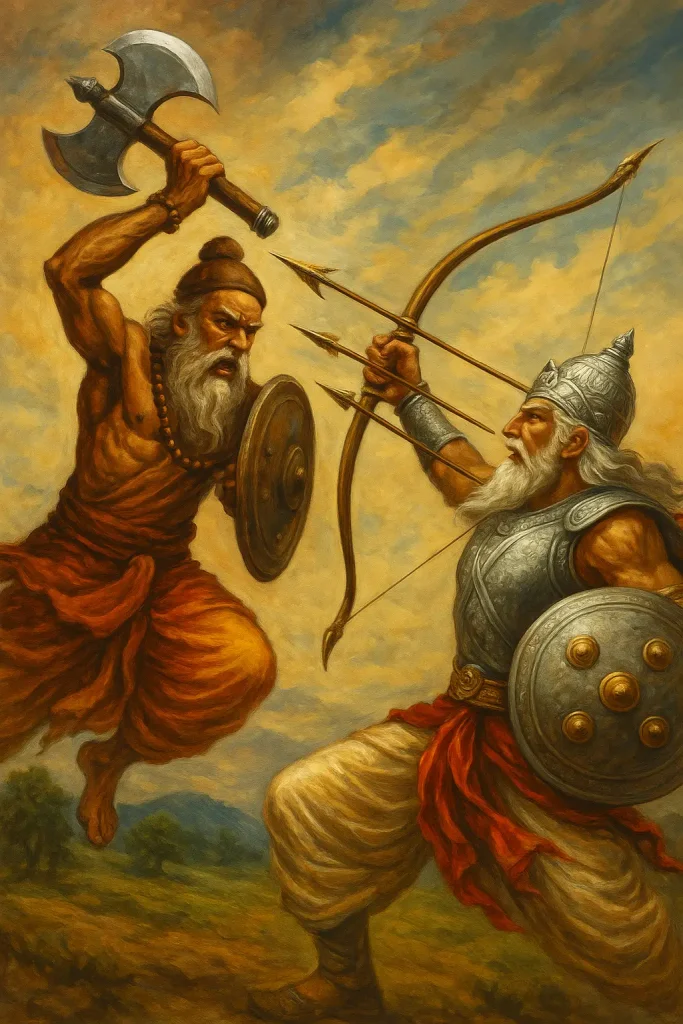
Finally, as Bhishma prepared to unleash a fatal celestial weapon, the gods and sages intervened. The battle ended in a draw, and Parashurama admitted defeat—not in battle, but in his ability to bring justice to Amba.
Austerity and the Wrath of Ganga
Refusing to relent, Amba embarked on an intense and unimaginable path of tapasya (austerities). She gave up food and water, stood motionless in forests and rivers, survived on air and fallen leaves, and subjected herself to extreme hardship for twelve years. Her goal was singular—to destroy Bhishma.
During this time, she encountered Goddess Ganga, Bhishma’s divine mother. Upon hearing Amba’s resolve, Ganga cursed her to become a twisted and desolate river that would flow only during the monsoon and remain dry the rest of the year—a symbol of her bitter obsession. Still, Amba endured, half turning into the cursed river, the other half wandering on her spiritual journey.
Boon from Lord Shiva
Amba’s penance eventually bore fruit. Lord Shiva appeared before her and granted her the boon she so desperately sought: that in her next birth, she would be born a man and become the cause of Bhishma’s death. Empowered and resolved, Amba walked to the banks of the Yamuna, built her own funeral pyre, and ended her life, declaring, “For Bhishma’s destruction!”
Rebirth: Shikhandi, the Warrior of Fate
True to Shiva’s promise, Amba was reborn in Panchala as Shikhandi, the child of King Drupada. Though born female, Shikhandi was raised as a male prince, for the king had received the divine assurance that this child would one day be the slayer of Bhishma.
Later, when Shikhandi’s gender was exposed after marriage, the groom’s family declared war. To save honor, Shikhandi received help from a benevolent yaksha, Sthunakarna, who exchanged sexes with her. From that day, Shikhandi became biologically male—ready to fulfill the destiny that was once Amba’s vengeance.
In one retelling, Amba had once been gifted a garland of ever-fresh lotuses by Kartikeya, the god of war, who declared that whoever wore it would bring about Bhishma’s fall. Rejected by kings, Amba had hung it on a pillar at Drupada’s palace. Shikhandi later wore the same garland, another symbol of fate fulfilled.
Kurukshetra War: Vengeance Realized
During the great Kurukshetra War, Shikhandi sided with the Pandavas, riding alongside Arjuna, the third Pandava brother. Bhishma, leading the Kaurava army, saw Shikhandi on the battlefield—but he refused to fight, for he had vowed never to raise arms against a woman or one who was once female.
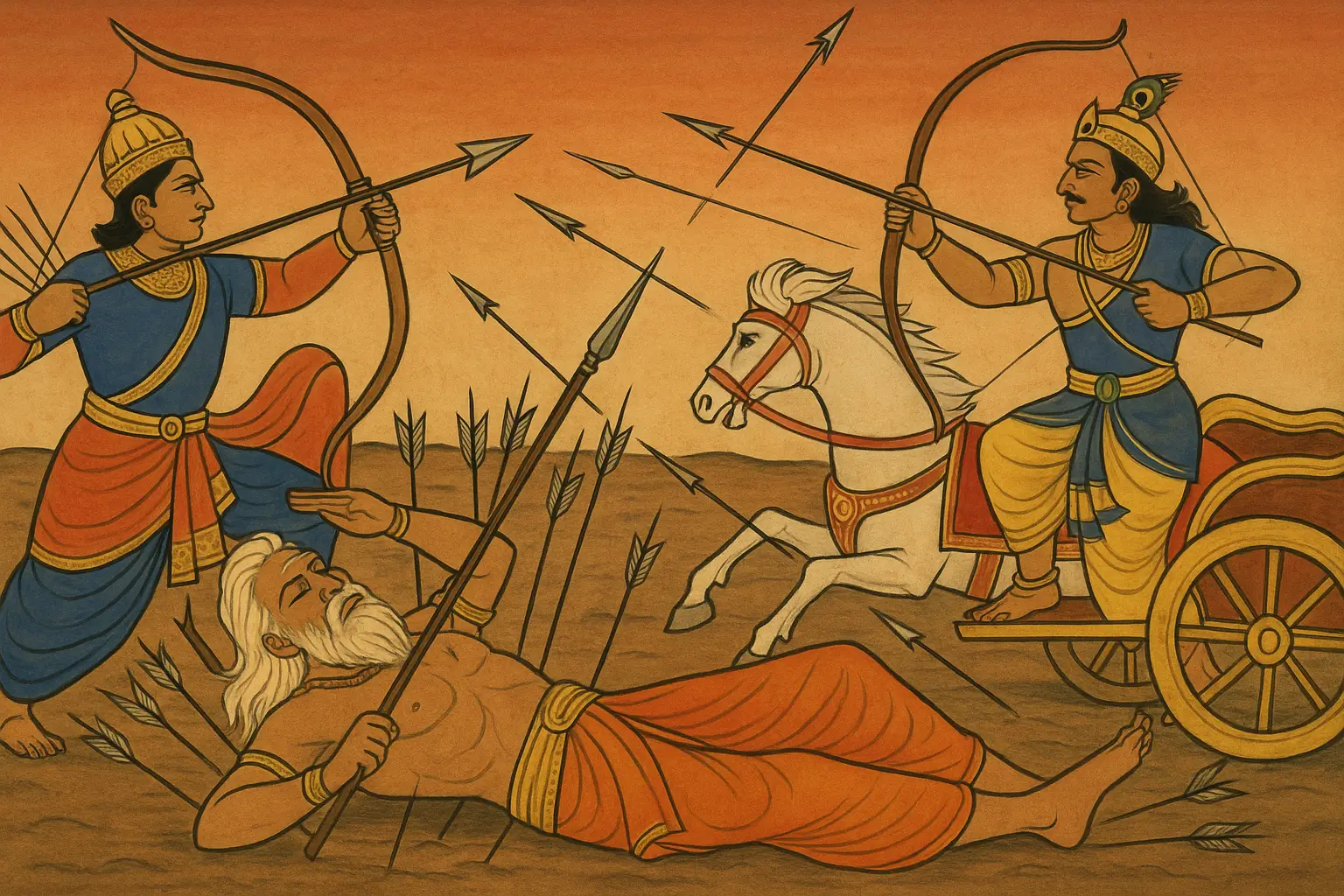
Using Shikhandi as a shield, Arjuna launched a devastating barrage of arrows. Bhishma, honoring his vow, did not retaliate and fell to the ground, his body pierced by countless arrows.
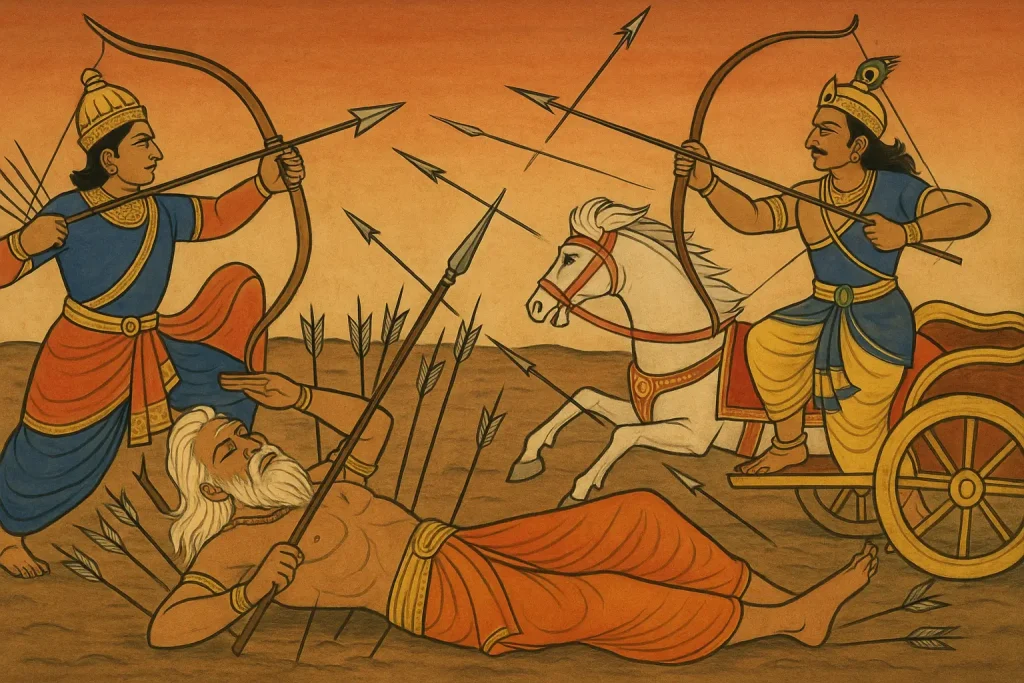
Before collapsing, Bhishma declared that it was Arjuna’s arrows, not Shikhandi’s, that had killed him—but it was Shikhandi’s presence that had made it possible. Thus, Amba’s vow was fulfilled, and her soul found peace.
Shikhandi’s Final Chapter
After the war, Shikhandi met his end during a brutal night raid on the Pandava camp by Ashwatthama, but not before achieving what even gods and sages could not—bringing the mighty Bhishma to his knees.
Legacy of Fire and Fate
Amba’s journey is unlike any other in the Mahabharata. From a princess wronged, to an ascetic consumed by purpose, to a warrior reborn—her story is a piercing reminder of how fate can be bent by willpower, how dharma can be defied, and how vengeance, when purified through fire, can become a tool of destiny.
In the end, Amba did not just seek justice—she became it.
Disclaimer: I wanted to take a moment to clarify that some of the articles we have written are factually correct, supported by verified data and sources. These articles provide accurate information that our audience can rely on.
However, there are also articles that are based on personal opinions. While these pieces offer valuable insights and perspectives, it's important to recognize that they reflect the views of the authors and may not be universally applicable or agreed upon.