
Bhishma: The Man Who Chose His Death

Bhishma was one of the most powerful and respected figures in the Mahabharata. His life was shaped by a vow he took for his father, a vow so strong that it changed the course of history.
Born as Devavrata, he was the son of King Shantanu and the goddess Ganga. He was supposed to be the next king of Hastinapura, but everything changed when his father fell in love with a woman named Satyavati.
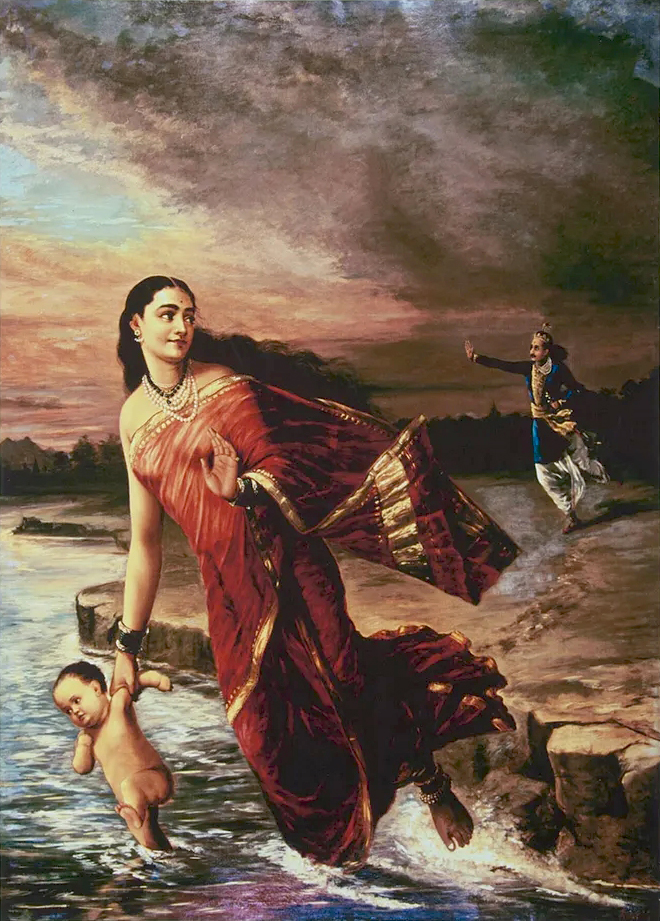
Satyavati’s father had one condition for the marriage—only her children should inherit the throne. To fulfill his father’s wish, Devavrata made an incredible sacrifice.
He gave up his right to the throne and took an even bigger vow—he would never marry or have children. This promise earned him the name Bhishma, meaning “the one who took a terrible vow.”
King Shantanu was so moved by his son’s sacrifice that he blessed him with a special boon—Bhishma could choose when he wanted to die. This made him nearly invincible in battle.
Bhishma’s Role in the Kuru Dynasty
Even though he was no longer the heir, Bhishma devoted his entire life to serving the throne of Hastinapura. He became the protector of the kingdom, guiding many generations of rulers.
After Shantanu’s death, Satyavati’s son Vichitravirya became king. However, he was weak and died early, leaving the throne without a successor. This created a crisis in the royal family.
To solve this, Satyavati asked her other son, Ved Vyasa, to perform Niyoga, an ancient practice where a sage fathered children for a royal bloodline. This led to the birth of Dhritarashtra, Pandu, and Vidura.
Despite not being the king, Bhishma remained the strongest pillar of the Kuru dynasty. He acted as a guardian for Dhritarashtra and Pandu, ensuring the stability of the kingdom.
However, his vow to remain celibate had unintended consequences. The throne passed on to weaker rulers, leading to conflicts that would eventually result in the great war of Kurukshetra.
Bhishma and the Pandavas
Bhishma played an important role in the lives of both the Kauravas and Pandavas. He loved and cared for them equally, but as the conflict between them grew, he found himself in a difficult position.
When the Pandavas were exiled, he remained silent, bound by his duty to the throne. He did not oppose Duryodhana’s injustice, though he personally did not support it.
He often warned Dhritarashtra and Duryodhana about the dangers of their actions. He tried to prevent war, advising peace between the brothers. But Duryodhana’s arrogance made it impossible.
Bhishma in the Kurukshetra War
When war finally broke out, Bhishma was forced to fight for the Kauravas, despite knowing that the Pandavas were on the side of righteousness. He led the Kaurava army as its supreme commander.
He fought with incredible strength, defeating many warriors. The Pandavas struggled to stand against him because of his experience and skill. Even Arjuna found it difficult to fight him.
However, Bhishma had taken an oath that he would never harm Draupadi or kill any of the Pandavas. This meant that even though he fought fiercely, he was not using his full power.
Seeing no way to defeat Bhishma, Krishna devised a plan. He knew that Bhishma had a soft spot for Shikhandi, who was born as a woman and later became a warrior.
Bhishma had vowed never to fight a woman or someone who was once a woman. Using this knowledge, Krishna told Arjuna to place Shikhandi in front during the battle.
When Shikhandi attacked, Bhishma refused to retaliate. Taking this chance, Arjuna shot multiple arrows, piercing Bhishma’s body. The great warrior fell, but he did not die immediately.
Bhishma’s Death on the Bed of Arrows
Because of his boon, Bhishma could choose when he wanted to die. He lay on the battlefield, resting on a bed of arrows, waiting for the right time.
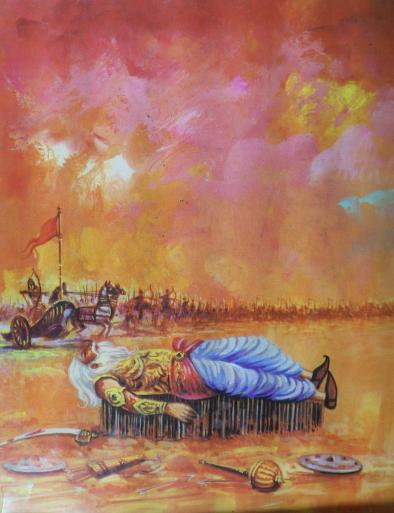
This moment became one of the most iconic and tragic scenes in the Mahabharata. Despite his pain, Bhishma remained calm and continued to give lessons on life, dharma, and leadership.
For many days, warriors from both sides came to seek his wisdom. Even Krishna and Yudhishthira listened to his teachings with great respect.
When the sun began moving towards the Uttarayana phase, Bhishma finally decided to leave his body. His soul departed in peace, having fulfilled his duty.
Bhishma’s Legacy
Bhishma’s story is one of duty, sacrifice, and honor. He gave up everything for his father, remained loyal to his vow, and upheld the principles of dharma.
However, his life also teaches us about the challenges of strict duty. His dedication to the throne led him to support injustice at times, even when he knew it was wrong.
Despite his power, Bhishma was bound by his own rules, showing that sometimes, even the greatest warriors are caught in the web of fate.
His teachings on dharma, leadership, and morality remain relevant even today. The lessons from his life continue to inspire generations, making him one of the most respected figures in Hindu history.
Disclaimer: I wanted to take a moment to clarify that some of the articles we have written are factually correct, supported by verified data and sources. These articles provide accurate information that our audience can rely on.
However, there are also articles that are based on personal opinions. While these pieces offer valuable insights and perspectives, it's important to recognize that they reflect the views of the authors and may not be universally applicable or agreed upon.