
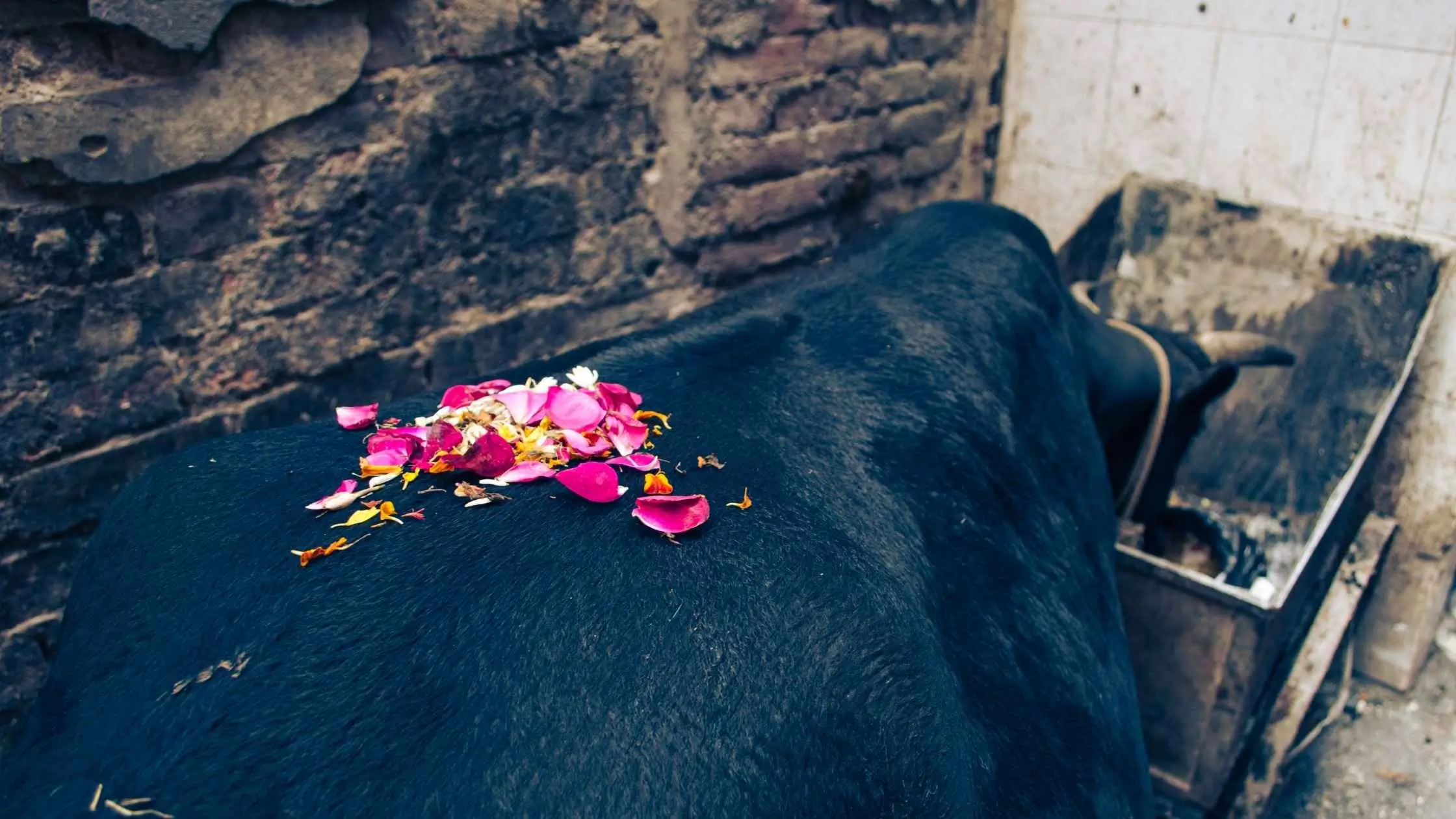
Why Do Hindus Worship the Cow?

When people hear that Hindus “worship” the cow, it often sparks curiosity. But the reality is a bit more nuanced. The cow holds a special place in Hindu culture because it symbolizes the giving nature of life, and by honoring the cow, Hindus honor all living beings.
Let’s dive into the deeper significance behind this tradition.
Honoring, Not Worshipping
It’s important to clarify that Hindus don’t worship the cow in the same way they worship gods or deities. Instead, they honor the cow as a symbol of life and nature’s generosity.
The cow is seen as a living representation of how life supports us—she takes in simple things like grass, water, and grains, and gives back milk, ghee, butter, yogurt, and much more in return.
This selfless act of giving is what Hindus seek to emulate in their own lives, making the cow a figure of respect and admiration.
Why the Cow?
Among all animals, why does the cow receive special recognition? To Hindus, the cow represents life itself—patient, giving, and undemanding. Much like Mother Earth, the cow provides nourishment, asking for little in return.
The cow gives milk, which sustains life, and is a vital part of the Indian agricultural economy. Over centuries, the cow became a symbol of abundance, grace, and the ability to give without taking.
In ancient India, agrarian communities relied heavily on cows not just for milk, but for agricultural work, as bulls were used to plow fields. This practical dependence naturally evolved into cultural reverence.
Festivals and Traditions
Hindus celebrate cows during special festivals, such as Gopashtami in India and Gai Tihar in Nepal, where cows are decorated with garlands, painted, and honored for their contributions. During Gai Tihar, a significant part of the Tihar festival (known as Diwali in India), cows are worshipped as symbols of prosperity and considered representatives of Lakshmi, the goddess of wealth.
On this day, families garland their cows with marigold flowers, feed them with special treats, and adorn them with tika (a sacred red mark on their forehead) to express gratitude for their sustenance.
This celebration highlights the deep reverence for cows, not only as vital providers but also as spiritual figures in Hindu culture.
In rural India, fairs often sell cow jewelry and special ornaments for festivals like Gopashtami and Gai Tihar. These traditions remind people of the cow’s place in their lives and the importance of recognizing the gifts nature provides.
As children, many Hindus grow up learning to feed and care for cows, and they participate in rituals that adorn and bless the animals. During festivals, children and adults alike take part in decorating the cows, feeding them special meals, and thanking them for their contributions to daily life.
These rituals help instill values of kindness, compassion, and generosity from an early age.
The Spiritual Significance of the Cow
On a deeper spiritual level, the cow represents virtues like gentleness, tolerance, and selfless service.
Mahatma Gandhi, a prominent figure in Hinduism and Indian history, once said, “The greatness of a nation and its moral progress can be judged by the way its animals are treated. Cow protection to me is not merely the protection of the cow. It means the protection of all that lives and is helpless and weak in the world.”
For Gandhi, reverence for the cow was a symbol of compassion toward all creatures, particularly those who are vulnerable.
The cow’s role in Hindu culture also extends to religious rituals. Milk and ghee (clarified butter) are key ingredients in Hindu worship and are used in temple offerings and sacred rites of passage.
These gifts from the cow are seen as essential components of purity and nourishment, not just in the physical sense but also in the spiritual sense.
The Legend of Kamadhenu: The Wish-Fulfilling Cow
In Hindu mythology, the cow is often associated with Kamadhenu, a divine wish-fulfilling cow. According to legend, Kamadhenu could grant any desire, providing an endless supply of wealth, food, and prosperity.
This association underscores the cow’s symbolic connection to abundance and the nurturing qualities of nature. Kamadhenu is revered as the mother of all cows and a symbol of the abundance that life and nature offer freely.
Ahimsa: Non-Violence and the Cow’s Role
Hinduism places a strong emphasis on ahimsa, the principle of non-violence. The cow, with its gentle and docile nature, becomes a living representation of this virtue. By treating cows with kindness, Hindus practice non-violence and compassion toward all living beings.
This belief is also why many Hindus are vegetarians or abstain from eating beef, as they see the cow as a sacred, giving creature that deserves respect.
Ahimsa extends beyond cows to all forms of life. The respect shown to the cow becomes a reminder to respect every living thing, from the smallest insect to the largest animal, creating a holistic view of life where no being is considered insignificant.
The Cow in Hindu Scriptures
The Vedas, ancient Hindu scriptures, refer to cows as symbols of wealth, happiness, and prosperity. Cows are praised for their nurturing qualities, and their presence is believed to bring good fortune.
One verse from the Rig Veda (4.28.1-6) beautifully expresses this sentiment:
“The cows have come and have brought us good fortune. In our stalls, contented, may they stay! May they bring forth calves for us, many-colored, giving milk for Indra each day. You make, O cows, the thin man sleek; to the unlovely you bring beauty. Rejoice our homestead with pleasant lowing. In our assemblies, we laud your vigor.”
This passage shows how deeply cows are woven into the fabric of Hindu life, not just as physical beings but as symbols of joy, prosperity, and good health.
Caring for Cows Today
Today, there are more than 3,000 institutions in India and Nepal called Gaushalas, which are charitable organizations that care for old, infirm, or abandoned cows. These institutions are run by charitable trusts and volunteers who work to protect cows from harm and ensure they live out their lives in comfort.
Gaushalas demonstrate the ongoing commitment within Hindu culture to honor and care for these animals, even when they are no longer able to produce milk.
While not all Hindus are vegetarians, many still observe a widely respected tradition of refraining from eating beef. This choice is often a reflection of the deep respect and reverence held for the cow and its symbolic meaning within the culture.
The reverence for cows in Hinduism is a reflection of a broader respect for life, nature, and the selfless giving that sustains humanity. By honoring the cow, Hindus embrace values of kindness, compassion, and gratitude for all that life provides.
While some may misunderstand this tradition as literal worship, it’s rooted in a deeper understanding of nature’s generosity and the need to protect and nurture all living beings.
In the end, the cow isn’t just an animal in Hindu culture—it’s a symbol of life’s abundance, an embodiment of non-violence, and a reminder of the importance of giving back more than we take.
By honoring the cow, Hindus aim to live in harmony with all of nature, striving toward a life of compassion, gratitude, and peace.
Disclaimer: I wanted to take a moment to clarify that some of the articles we have written are factually correct, supported by verified data and sources. These articles provide accurate information that our audience can rely on.
However, there are also articles that are based on personal opinions. While these pieces offer valuable insights and perspectives, it's important to recognize that they reflect the views of the authors and may not be universally applicable or agreed upon.