
How Many Parts in Swasthani Brata Katha?

The Swasthani Brata Katha holds a special place in the hearts of Hindu devotees, particularly in Nepal, where it has been cherished for centuries. If you’re wondering about the structure of this sacred text, the answer is straightforward: the Swasthani Brata Katha contains 31 chapters, each designed to be recited over the course of one month during the holy period.
Understanding the Structure of Swasthani Brata Katha
The sacred text is meticulously organized into 31 distinct chapters, mirroring the lunar month during which it is recited. This isn’t a coincidence—the structure reflects the deep connection between the text and the ritual observance period. The 31 chapters begin on Poush Shukla Purnima and conclude on Magh Shukla Purnima the following month, creating a complete spiritual journey for devotees.
Each chapter serves a specific purpose in the overall narrative, weaving together divine stories that teach moral lessons and showcase the power of devotion. The systematic division ensures that families can comfortably read one chapter per day, making the month-long observance manageable and spiritually enriching.
The Narrative Journey Through 31 Chapters
The chapters of Swasthani Brata Katha take readers on an extraordinary journey through Hindu mythology. The initial chapters focus on episodes related to Satidevi, Lord Shiva’s wife, describing her sufferings and how she bore them with courage before Shree Swasthani rescued her from troubles and agonies. This sets the tone for the entire text, establishing themes of devotion, perseverance, and divine intervention.
The book contains stories narrated by Lord Kumar, the elder son of Lord Shiva and Goddess Parvati, to Agasthya Muni, a revered saint who wanted to understand how the universe was formed. This framework provides authenticity and divine origin to the narratives contained within all 31 chapters.
The chapters progress through various tales featuring gods, goddesses, demons, and mortal devotees. Each story reinforces the central theme: the supreme power of Goddess Swasthani and the rewards that come from sincere devotion. The narratives explore how devotees sometimes unknowingly stray toward wrongdoing but are ultimately saved through the goddess’s grace.
Historical Significance and Origins
The Swasthani Bakhan was first written around 1573 by Jayanta Dev in Newari, and from the early 19th century, it gained widespread popularity following its translation into Nepali. This historical context helps us appreciate how the 31-chapter structure has remained intact through centuries of transmission, demonstrating the text’s enduring relevance.
The preservation of exactly 31 chapters across different versions and translations speaks to the sacred nature of this number in the context of lunar calendar-based religious observances. The text has been carefully maintained in its original structure, ensuring that modern practitioners can follow the same spiritual path as their ancestors.
The Daily Ritual of Reading
During the Swasthani Brata observance, devotees typically gather each day to read one chapter from the sacred text. The Katha commences on the full moon day of Poush/Magh and proceeds through the series of 31 chapters for 31 days until the next full moon. This daily practice creates a rhythm that structures the entire month around spiritual devotion and family togetherness.
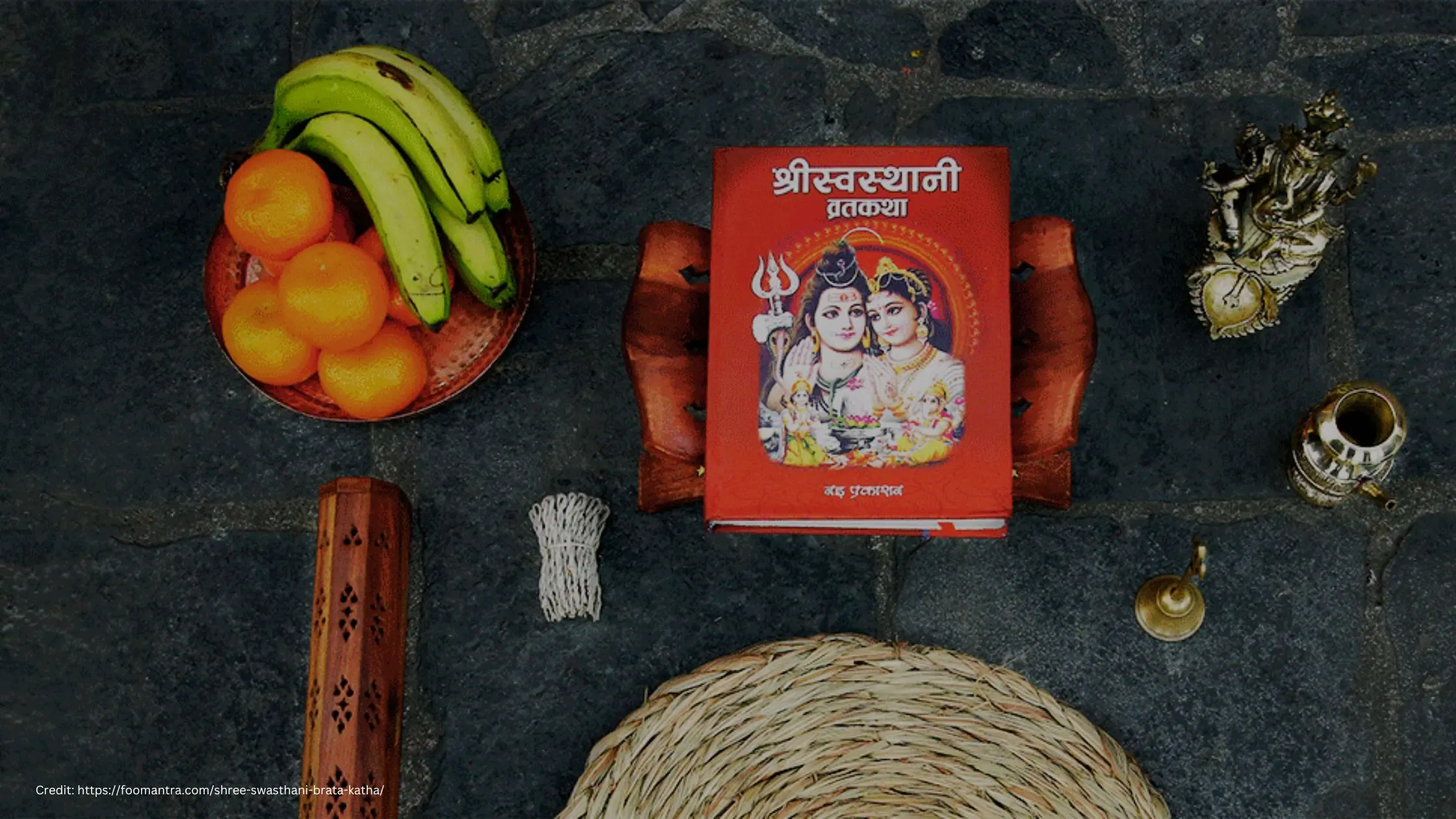
Families worship the book with holy offerings including red vermillion powder, saffron, wheat, sesame, flowers, incense, and butter lamps before beginning each day’s reading. Some devotees read in the early morning after bathing, while others prefer evening sessions. The important thing is maintaining consistency throughout the month, reading one chapter each day without interruption.
The practice of reading one chapter daily serves multiple purposes beyond religious observance. It brings families together, creates dedicated time for spiritual reflection, and ensures that even busy households can participate in this month-long devotion without feeling overwhelmed.
Themes Across the 31 Chapters
Throughout the 31 chapters, several recurring themes emerge that give the Swasthani Brata Katha its profound spiritual significance. The text emphasizes the importance of faith, especially during difficult times. Stories demonstrate how devotion to Goddess Swasthani can transform lives, resolve seemingly impossible problems, and restore dharma when it has been compromised.
The chapters also highlight the goddess’s superiority in the Hindu pantheon, portraying her as more powerful than even Brahma, Vishnu, and Shiva. This bold theological statement runs through multiple chapters, establishing Swasthani as the supreme protector and wish-fulfiller for her devotees.
Family values and proper conduct form another major theme. Many chapters feature stories that illustrate the consequences of disrespecting elders, breaking vows, or acting against dharma. Conversely, they show how maintaining virtue, honoring commitments, and treating family members with respect leads to blessings and prosperity.
The Special Significance of Completing All 31 Chapters
Devotees consider it essential to complete all 31 chapters without interruption. Starting the Brata but failing to complete it is viewed as incomplete worship that may not yield the desired spiritual benefits. This understanding motivates families to maintain their commitment throughout the entire lunar month, regardless of other obligations or challenges that may arise.
The completion of the final chapter marks a special occasion. On this concluding day, devotees perform elaborate rituals. They paint the sacred symbol Om on a copper plate, create a makeshift Shiva Linga from mud on the same plate, and worship this representation of Lord Shiva. This final ceremony brings the month-long journey through 31 chapters to a meaningful close.
Cultural Impact and Modern Observance
The 31-chapter structure has contributed significantly to the Swasthani Brata Katha’s accessibility and popularity. Unlike longer religious texts that might seem daunting, the division into manageable daily chapters makes it practical for families to incorporate into their routine. This structure has helped the tradition survive and thrive in modern times, even as lifestyle patterns have changed dramatically.
Many families now use digital applications and audiobooks to access the 31 chapters, making the tradition accessible to Nepalis living abroad who want to maintain their cultural and religious connections. The chapter structure translates well to digital formats, allowing users to track their progress and easily navigate to each day’s reading.
The Sacred Geography of Swasthani Worship
During the month-long observance of the 31 chapters, thousands of devotees visit Sankhu, where the Shalinadi river flows. This location holds special significance in the Swasthani tradition, and a grand festival takes place throughout the month. Pilgrims take holy baths in the river and worship at the Swasthani Mata Mandir while following the daily chapter readings.
The connection between place and text reinforces the living nature of this tradition. Reading each of the 31 chapters isn’t merely an intellectual exercise but part of a comprehensive spiritual practice that includes fasting, worship, pilgrimage, and community participation.
Conclusion
The Swasthani Brata Katha’s 31 chapters represent more than just a numerical division of text—they embody a carefully designed spiritual journey that aligns with the lunar calendar and creates a sustainable daily practice for devotees. Each chapter builds upon the previous one, creating a month-long narrative arc that takes readers through essential teachings about devotion, morality, and divine grace.
Whether you’re a longtime practitioner or someone newly curious about this tradition, understanding the 31-chapter structure helps you appreciate the thoughtful organization of this sacred text. The one-chapter-per-day format has ensured the tradition’s continuity across generations and its relevance in contemporary spiritual life.
For those embarking on the Swasthani Brata for the first time, knowing that the journey consists of 31 chapters can help with planning and commitment. Each chapter offers its own wisdom and blessings, making the complete reading of all 31 chapters a truly transformative spiritual experience.
Read More About Swasthani Brata Katha:
- Swasthani Brata Kratha 2026: Significance and Traditions in Nepal
- Mantras Recited Before and After Swasthani Brata Katha
Disclaimer: I wanted to take a moment to clarify that some of the articles we have written are factually correct, supported by verified data and sources. These articles provide accurate information that our audience can rely on.
However, there are also articles that are based on personal opinions. While these pieces offer valuable insights and perspectives, it's important to recognize that they reflect the views of the authors and may not be universally applicable or agreed upon.