
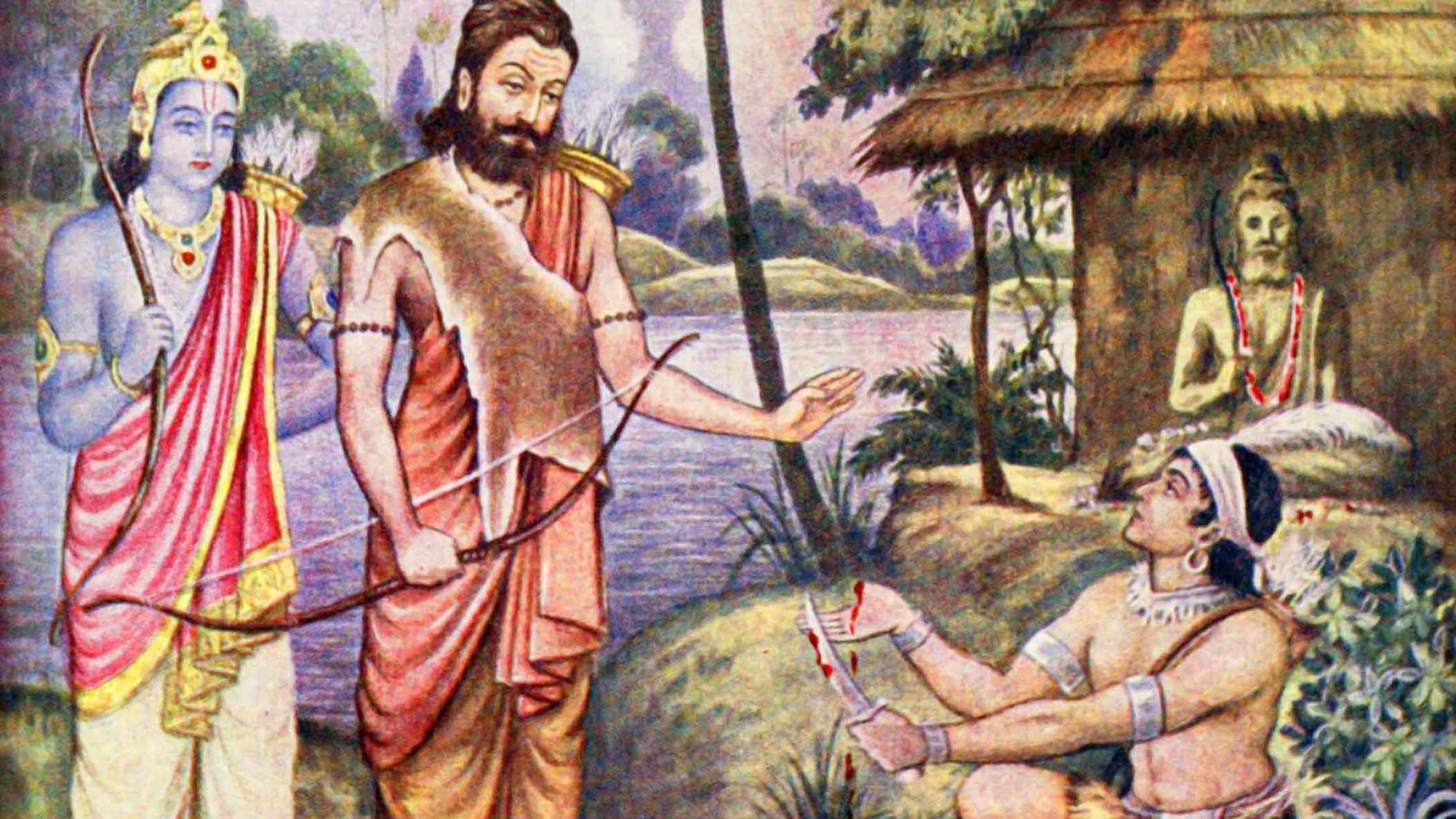
Ekalavya: The Forgotten Hero of the Mahabharata

The Mahabharata is filled with legendary warriors, wise sages, and powerful kings, but one of its most tragic and inspiring characters is Ekalavya. His story is one of determination, self-belief, and sacrifice, yet he is often overlooked in the grand narrative of the epic.
Ekalavya was a self-taught archer, a warrior who achieved greatness without formal training. He considered Dronacharya, the royal teacher of the Pandavas and Kauravas, as his guru, even though he was never formally accepted as his disciple.
However, his extraordinary skill became a threat to the royal princes, particularly Arjuna, who was Drona’s favorite student. This led to one of the most heartbreaking incidents in the epic—Ekalavya cutting off his own thumb as guru dakshina (teacher’s fee) when Drona demanded it.
His story is not just about loss, but about dedication, perseverance, and the harsh realities of social inequality in ancient times.
Who Was Ekalavya?
Ekalavya was the prince of the Nishadas, a tribal community that lived in forests and was often looked down upon by the ruling Kshatriyas. Despite being a prince, he was considered an outsider in the world of elite warriors like Arjuna, Bhima, and Duryodhana.
Unlike the Pandavas and Kauravas, who had access to the best training and resources, Ekalavya had no formal education, no powerful kingdom, and no divine weapons. Yet, he had something more powerful—an unshakable will to learn.
From a young age, he dreamt of becoming the greatest archer in the world. He knew that the best teacher of warfare was Guru Dronacharya, who taught the royal princes of Hastinapura.
Ekalavya’s Rejection by Dronacharya
One day, Ekalavya approached Dronacharya and expressed his desire to become his student. He stood before the great teacher with folded hands, hoping to be accepted into the elite training school.
However, Drona refused to teach him.
The reason was simple—Ekalavya was not a Kshatriya. Drona had been appointed to train only the princes of Hastinapura, ensuring that they became the greatest warriors of their time. Teaching a tribal prince was out of the question.
But Ekalavya did not lose hope. He did not argue, complain, or curse his fate. Instead, he found another way.
Ekalavya’s Self-Learning and Dedication
Determined to master the art of archery, Ekalavya went deep into the forest and began training himself. He did not have a guru, so he made a statue of Dronacharya out of clay and treated it as his teacher.
Every day, he practiced tirelessly in front of the statue, believing that his guru’s blessings were with him. His focus, discipline, and determination allowed him to master archery on his own.
Without any formal training, Ekalavya became so skilled that he could shoot arrows with unmatched precision and speed.
His hard work eventually paid off—he became one of the best archers in the world, surpassing even the greatest students of Dronacharya.
Ekalavya’s Encounter with the Royal Princes
One day, the Pandavas and Kauravas were hunting in the forest, along with Dronacharya. Their hunting dogs ran ahead of them when suddenly, they stopped barking.
To their shock, they saw that someone had filled the dog’s mouth with arrows—without causing it any harm. This meant that the archer had been so fast and precise that he could silence the dog without injuring it.
The princes were amazed, but Dronacharya was troubled. He knew that only an extremely skilled warrior could do such a thing.
When they searched the forest, they found Ekalavya practicing with his bow. He greeted Dronacharya with great respect, treating him as his guru.
Dronacharya was astonished. How could someone become so skilled without formal training? He asked Ekalavya who had taught him.
Ekalavya humbly replied, “You, Guru Drona. I consider you my teacher.”
Even though Dronacharya had never trained him, Ekalavya’s devotion was so strong that he believed Drona’s presence alone had guided him.
Dronacharya’s Fear and Demand for Guru Dakshina
This event deeply disturbed Arjuna. He had always been told that he was the best archer in the world, but now he saw someone even better than him.
Arjuna complained to Dronacharya, asking, “You promised me that no one would ever surpass me in archery. Yet here is someone more skilled than I am!”
Dronacharya realized that Ekalavya’s talent was a threat to Arjuna’s position as the greatest archer. He could not allow a self-taught warrior to outshine his best student.
So, he did something shocking. He asked Ekalavya for guru dakshina—a traditional offering that students gave to their teachers.
Ekalavya, filled with gratitude, replied, “Guru, I will give you anything you ask for.”
Drona then made a cruel demand—he asked for Ekalavya’s right thumb.
The right thumb was essential for an archer. Without it, Ekalavya would never be able to use his bow the same way again.
Ekalavya’s Ultimate Sacrifice
Even though this request was devastating, Ekalavya did not hesitate for a moment. Without questioning his guru, he cut off his right thumb and placed it at Dronacharya’s feet.
With this one act, his dreams were shattered. The greatest archer of his time had been silenced—not by war, but by an unfair demand.
Yet, Ekalavya did not protest. He accepted his fate with a smile, believing that he had fulfilled his duty as a disciple.
What Happened to Ekalavya After?
Losing his thumb meant that Ekalavya could never compete as an archer in battle, but he did not give up on life.
Despite this setback, he continued to practice archery using his remaining fingers and still became a formidable warrior. However, his fate was far different from that of Arjuna and the other great warriors of the Mahabharata.
Later in life, Ekalavya joined King Jarasandha of Magadha, an enemy of Krishna. He eventually died in battle, fighting against Krishna’s army.
Legacy of Ekalavya
Ekalavya’s story is one of devotion, sacrifice, and injustice. His unwavering respect for his guru cost him his dream, but it also made him a symbol of determination and self-learning.
His life raises important questions about privilege and inequality. He was not born into a royal family, and he was denied opportunities despite being the most talented archer of his time.
Yet, he never gave up. He proved that greatness is not defined by birth, but by effort and dedication.
Even today, Ekalavya’s name is remembered with honor and admiration. His sacrifice remains one of the most powerful and heartbreaking moments in the Mahabharata, teaching us that true devotion comes with a price—but also with timeless respect.
Disclaimer: I wanted to take a moment to clarify that some of the articles we have written are factually correct, supported by verified data and sources. These articles provide accurate information that our audience can rely on.
However, there are also articles that are based on personal opinions. While these pieces offer valuable insights and perspectives, it's important to recognize that they reflect the views of the authors and may not be universally applicable or agreed upon.