

Dashain Blessing Mantras for Males and Females

Dashain, one of the most important Hindu festivals, is celebrated across Nepal and parts of India with great devotion and joy. The festival is a time for family gatherings, blessings, and rituals that hold profound spiritual significance.
One of the key moments of Dashain is the tika ceremony, where elders apply tika (a red mixture of rice, yogurt, and vermillion) on the foreheads of the younger family members, along with reciting powerful Sanskrit mantras. These mantras invoke blessings for long life, health, prosperity, strength, and wisdom.
Interestingly, different mantras are recited for males and females during the Dashain tika ceremony, each tailored to invoke specific virtues and divine qualities relevant to them. In this article, we’ll explore both mantras, breaking down their meanings and significance within the context of Dashain.
Dashain Blessing Mantra for Males
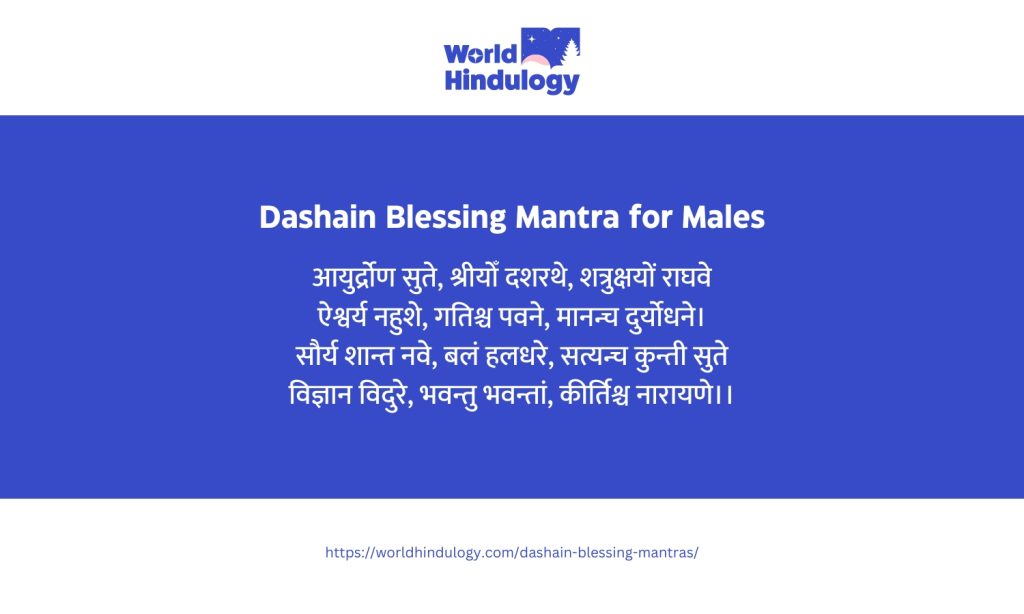
This mantra is a traditional blessing recited by elders for younger males during the Dashain tika ceremony. It draws on the virtues of legendary figures from Hindu mythology and asks for their qualities to be bestowed upon the recipient.
Sanskrit Mantra
आयुर्द्रोण सुते, श्रीयोँ दशरथे, शत्रुक्षयों राघवे
ऐश्वर्य नहुशे, गतिश्च पवने, मानन्च दुर्योधने।
सौर्य शान्त नवे, बलं हलधरे, सत्यन्च कुन्ती सुते
विज्ञान विदुरे, भवन्तु भवन्तां, कीर्तिश्च नारायणे।।
Meaning and Breakdown of the Male Blessing Mantra
This powerful mantra draws upon the qualities of various mythological figures, invoking their attributes for the younger male family members. Here’s the breakdown of the meaning:
1. आयुर्द्रोण सुते (Ayur Drona Sute) – “May you have the long life of Ashwatthama, the son of Dronacharya”
Ashwatthama is known for his immortality and endurance. This blessing wishes for a long, healthy, and enduring life, invoking Ashwatthama’s eternal vitality.
2. श्रीयोँ दशरथे (Shriyo Dasharathe) – “May you have the wealth and prosperity of Lord Rama, the son of Dasharatha”
Lord Rama, the epitome of virtue, also represents wealth and prosperity. This blessing calls for both material and spiritual abundance in life, asking for the recipient to live a prosperous life, filled with honor and righteousness.
3. शत्रुक्षयों राघवे (Shatru Kshayo Raghave) – “May you have the power to destroy enemies like Raghava (Rama)”
Rama is celebrated for his triumph over Ravana, symbolizing the victory of good over evil. This part of the mantra bestows strength and courage to overcome all challenges, just as Rama defeated his enemies.
4. ऐश्वर्य नहुशे (Aishwarya Nahushe) – “May you have the sovereignty and grandeur of King Nahusha”
Nahusha was a powerful king who ruled heaven. This blessing is for sovereignty, leadership, and the qualities of a wise and just ruler.
5. गतिश्च पवने (Gatishcha Pavane) – “May you have the speed and agility of Hanuman, the son of the wind god”
Hanuman, known for his devotion, strength, and speed, is referenced here to bless the recipient with agility and quick thinking, both physically and mentally.
6. मानन्च दुर्योधने (Maanamcha Duryodhane) – “May you have the honor of Duryodhana”
While Duryodhana was often considered the villain of the Mahabharata, he was also known for his pride and sense of honor. This part of the mantra asks for respect and dignity for the recipient, ensuring they are honored in their community.
7. सौर्य शान्त नवे (Sourya Shaanta Nave) – “May you have the valor of King Shantanu”
Shantanu was a noble king known for his bravery. This blessing invokes courage and valor to face the challenges of life with dignity.
8. बलं हलधरे (Balam Haldhare) – “May you have the strength of Balarama, the wielder of the plough”
Balarama, the elder brother of Lord Krishna, was known for his physical strength. This blessing grants the recipient strength and resilience to endure life’s struggles.
9. सत्यन्च कुन्ती सुते (Satyamcha Kunti Sute) – “May you have the truthfulness of Yudhishthira, the son of Kunti”
Yudhishthira, known for his commitment to truth and righteousness, represents moral strength. This blessing calls for a life led by truth and adherence to dharma.
10. विज्ञान विदुरे (Vijnanam Vidure) – “May you have the wisdom of Vidura”
Vidura, the wise minister from the Mahabharata, was known for his sharp intellect and fairness. This part of the mantra invokes wisdom, intelligence, and sound judgment.
11. भवन्तु भवन्तां (Bhavantu Bhavantam) – “May all these qualities be yours”
This phrase consolidates all the blessings, asking for the recipient to embody the virtues of long life, wealth, strength, wisdom, and glory.
12. कीर्तिश्च नारायणे (Keertischa Narayane) – “May you have the fame and glory of Lord Narayana (Vishnu)”
This final blessing invokes the eternal glory and fame of Lord Vishnu, ensuring the recipient lives a life of honor, respect, and lasting achievement.
The Dashain Blessing Mantra for Females

For females, the mantra recited during Dashain invokes the names of Goddess Durga in her various forms, blessing the recipient with strength, protection, patience, and prosperity. This mantra is a tribute to the divine feminine power in Hinduism.
Sanskrit Mantra
जयन्ती, मङ्गला, काली, भद्रकाली, कपालिनी
दुर्गा, क्षमा, शिवाधात्री, स्वाहा स्वाधा नमस्तुते।।
Meaning and Breakdown of the Female Blessing Mantra
This mantra calls upon various forms of Goddess Durga, each representing a different aspect of power, patience, and protection.
1. जयन्ती (Jayanti) – “Victory”
This name of Durga refers to her victorious nature. The blessing invokes success and triumph in all endeavors, ensuring the recipient overcomes challenges with grace.
2. मङ्गला (Mangala) – “Auspicious”
Mangala means auspiciousness or good fortune. This blessing asks for a life filled with happiness, prosperity, and auspicious events.
3. काली (Kali) – “The Fierce One”
Kali is the fierce form of Durga, representing destruction of evil and protection from harm. This part of the mantra grants strength, courage, and the ability to face difficult situations with determination.
4. भद्रकाली (Bhadrakali) – “The Auspicious and Gentle One”
Bhadrakali is the benevolent form of Kali, symbolizing gentleness and kindness. This blessing is for a life that balances strength with compassion and patience.
5. कपालिनी (Kapalini) – “The One Who Wears Skulls”
This refers to the fierce, transformative energy of Durga. Kapalini represents the ability to remove obstacles and transform negative energies into positive outcomes.
6. दुर्गा (Durga) – “The Invincible”
Durga is the invincible warrior goddess. This part of the mantra calls for protection from harm and the strength to overcome any adversities that may arise.
7. क्षमा (Kshama) – “Patience”
Kshama symbolizes patience and forgiveness. This blessing is for emotional strength, the ability to forgive, and the patience needed to endure life’s challenges.
8. शिवाधात्री (Shivadhatri) – “Supporter of Lord Shiva”
Shivadhatri refers to Durga as the consort and supporter of Lord Shiva. This part of the mantra represents balance, harmony, and nurturing qualities in life.
9. स्वाहा (Swaha) – “The One Who Receives Sacrifices”
Swaha is often used in Vedic rituals and symbolizes acceptance and nourishment. This blessing is for a life filled with spiritual fulfillment and devotion.
10. स्वाधा (Swadha) – “The One Who Nourishes Ancestors”
Swadha is a term used in oblations offered to ancestors. This blessing calls for respect for traditions, family values, and the well-being of ancestors.
11. नमस्तुते (Namastute) – “I bow to you”
This final part of the mantra is a salutation to the divine feminine, expressing reverence and invoking the blessings of Goddess Durga in her many forms.
Cultural and Religious Significance of the Dashain Mantras
During the Dashain tika ceremony, these mantras are recited to bless younger family members, offering them the divine virtues and qualities of the mythological figures and goddesses referenced.
The tika (a mixture of rice, yogurt, and vermillion) represents protection and victory, while the jamara (sprouted barley) signifies growth, prosperity, and fertility.
These mantras serve as a bridge between the divine and the human, invoking the power of gods and goddesses to grant health, strength, wisdom, and success to the younger generation.
Power of Dashain Blessings
The Dashain blessing mantras for males and females are deeply rooted in Hindu culture, calling upon the divine forces to bless individuals with qualities such as longevity, strength, wisdom, and prosperity.
Whether you are receiving the male mantra invoking heroes like Lord Rama and Hanuman, or the female mantra calling upon Goddess Durga in her various forms, these blessings serve as powerful spiritual gifts passed from elders to younger generations.
As Dashain approaches, these mantras remind us of the importance of family, tradition, and the continued transmission of spiritual and cultural values.
May the blessings of Dashain fill your life with health, happiness, and divine protection.
Disclaimer: I wanted to take a moment to clarify that some of the articles we have written are factually correct, supported by verified data and sources. These articles provide accurate information that our audience can rely on.
However, there are also articles that are based on personal opinions. While these pieces offer valuable insights and perspectives, it's important to recognize that they reflect the views of the authors and may not be universally applicable or agreed upon.