
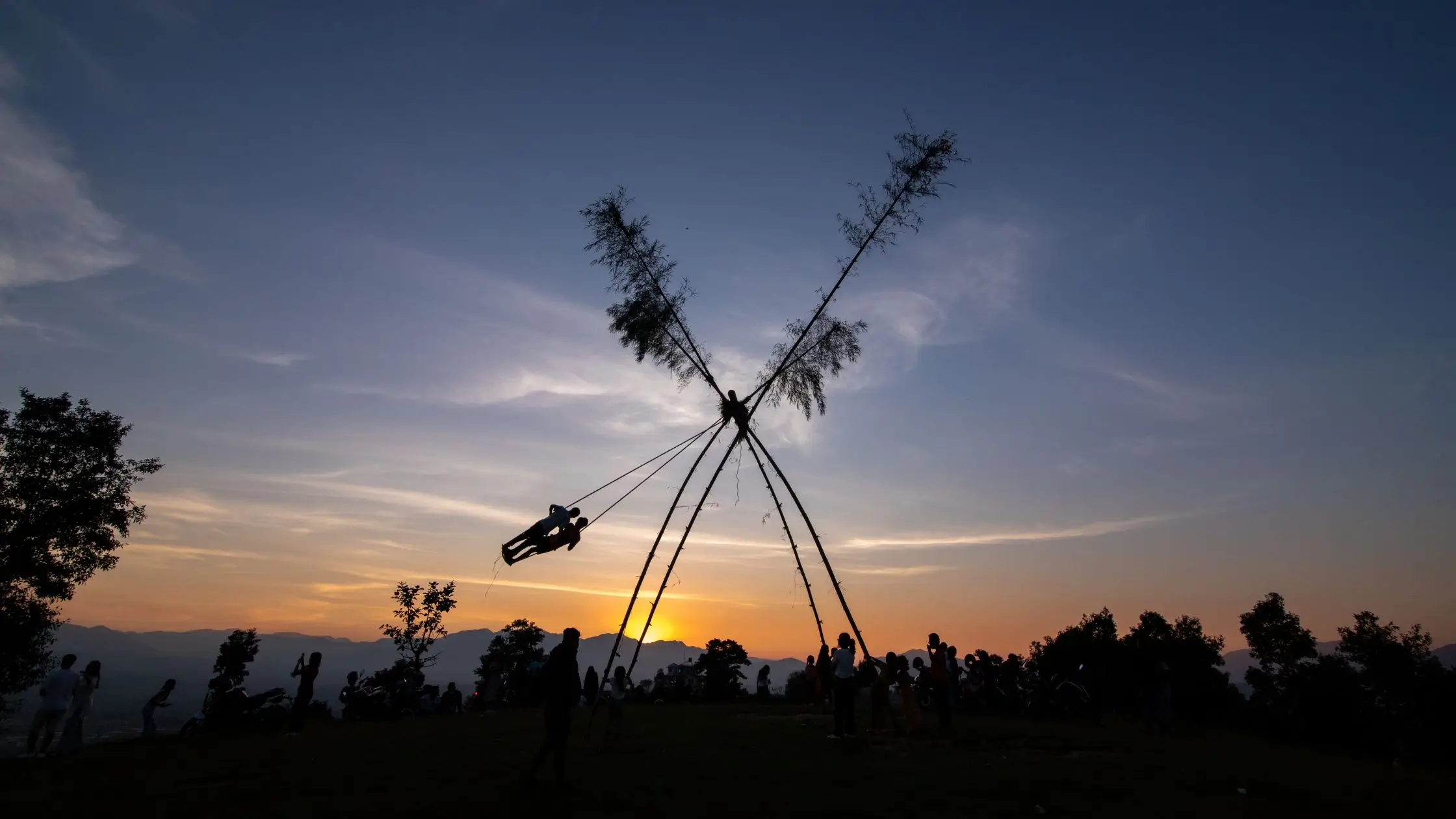
Dashain – Meaning Behind 15 Days

Imagine a festival that spans 15 days, filling the air with joy, devotion, and togetherness.
Dashain, the longest and most celebrated Hindu festival in Nepal, is more than just a holiday; it’s a spiritual journey that honors the triumph of good over evil. Each day of this festival carries its own rituals, meanings, and traditions that have been passed down through generations.
In this article, we’ll take a deep dive into the significance of Dashain, breaking down each of the 15 days to understand its cultural, religious, and social impact.
Whether you’re already familiar with Dashain or discovering it for the first time, this guide will provide a detailed look at the festival and the profound meanings behind each day.
What is Dashain?
Dashain, also known as Vijaya Dashami, is a Hindu festival celebrated primarily in Nepal, as well as in parts of India, Bhutan, and among the Nepalese diaspora around the world.
The festival symbolizes the victory of good over evil, with roots in Hindu mythology, particularly the stories of Goddess Durga’s victory over the buffalo demon Mahishasura and Lord Rama’s triumph over Ravana in the Ramayana.
The celebration lasts for 15 days, each of which is filled with unique religious rituals, offerings, and gatherings of family and friends. Dashain holds great significance in Nepalese society as it also serves as a time for family reunions and blessings from elders.
The Meaning Behind Each Day of Dashain
Let’s explore each day of the 15-day festival, uncovering its religious importance, customs, and traditions.
Day 1: Ghatasthapana – Invoking the Goddess Durga
Dashain begins with Ghatasthapana, the day when the kalash (holy water vessel) is installed as a symbol of Goddess Durga. On this day, people prepare a special space in their homes or temples to sow seeds of barley, corn, or wheat.
These seeds are placed in a sand bed and watered daily until they sprout into jamara, a symbol of prosperity and fertility.
Significance: Ghatasthapana represents the invocation of Goddess Durga, asking for her protection and blessings throughout the festival. The growing jamara signifies new beginnings, growth, and the triumph of life over darkness.
Rituals
- The kalash is filled with water, covered with cow dung, and placed in a sacred space.
- Priests or elders recite mantras and prayers to invite Durga’s energy into the household.
- The jamara seeds are planted in a mixture of sand and soil.
Day 2–6: Continuing the Rituals and Worship
During the second to the sixth day, households continue to perform daily rituals and prayers to Goddess Durga. These days are quieter in comparison to the major events later in the festival. However, people remain devoted to maintaining the sprouting jamara, which continues to grow.
Significance: The first few days emphasize patience, devotion, and consistent worship as families prepare for the upcoming main events of Dashain.
Rituals
- Offering flowers, incense, and fruits to the goddess.
- Ensuring the jamara receives proper care and grows healthy, symbolizing prosperity.
Day 7: Fulpati – Welcoming Sacred Flowers
Fulpati marks a turning point in the Dashain festival. On this day, a procession brings sacred flowers and other items from the Gorkha Durbar (royal palace) to Kathmandu’s Hanuman Dhoka.
Traditionally, this procession involved royal priests and government officials, and while the monarchy no longer rules, the ritual continues to this day.
Significance: Fulpati is a day of welcoming prosperity, symbolized by the sacred flowers. It represents the blessings of the goddess arriving in the capital and into people’s homes.
Rituals
- Sacred items, including the jamara, are carried in a grand procession.
- Families place flowers on their altars to represent the arrival of blessings.
- Elders offer prayers for peace and prosperity.
Day 8: Maha Ashtami – The Fierce Day of Durga’s Power
Maha Ashtami is one of the most important days of Dashain, dedicated to worshipping the fierce forms of Goddess Durga. On this day, devotees offer animal sacrifices, typically goats, buffaloes, and chickens, to honor the goddess and seek her protection.
However, in modern times, many households opt for symbolic offerings like coconuts, fruits, and pumpkins instead.
Significance: Maha Ashtami represents the height of Durga’s power as she defeated the evil forces. The sacrifices symbolize the destruction of negative energies and the goddess’s ability to protect her devotees.
Rituals
- Families perform pujas (prayers) and offer sacrifices to the goddess.
- The sacrifices are believed to bring good fortune and remove obstacles.
- The prasad (blessed food) from the offerings is shared with family and friends.
Day 9: Mahanawami – Honoring Durga’s Victory
Mahanawami, the ninth day of Dashain, is a day of celebration for Durga’s triumph over evil. On this day, people worship Durga as the goddess of victory and power. It is also a day when machinery, tools, and vehicles are worshipped for protection and blessings.
Significance: Mahanawami symbolizes the final battle between Durga and Mahishasura. It is a day to seek protection and blessings from the goddess for all tools, equipment, and weapons, ensuring they bring good fortune.
Rituals
- Families clean and decorate their tools, machinery, and vehicles, offering them to the goddess.
- Animal sacrifices continue in some regions to symbolize the goddess’s fierce nature.
- People prepare for Vijaya Dashami, the most significant day of Dashain.
Day 10: Vijaya Dashami – The Day of Victory
Vijaya Dashami, the tenth day of Dashain, is the most important day of the festival. On this day, families gather to receive tika (a red mark made from rice, yogurt, and vermillion) and jamara from their elders.
The tika is applied to the forehead as a blessing, and the jamara is placed on the head as a symbol of growth and protection.
Significance: Vijaya Dashami celebrates the ultimate victory of good over evil, symbolizing Goddess Durga’s triumph. The tika and jamara serve as blessings for a prosperous year ahead.
Rituals
- Elders apply tika and jamara to younger family members while offering blessings for health, success, and happiness.
- Families exchange gifts and share meals, strengthening their bonds.
- This day continues to emphasize the importance of family unity and divine blessings.
Day 11–14: Tika Continues
In the days following Vijaya Dashami, families continue visiting relatives and receiving tika and jamara. The extended celebrations allow people to reconnect with distant family members and spread the joy of Dashain.
Significance: These days symbolize the continuation of blessings and family unity. It is a time for reflection, gratitude, and sharing happiness with loved ones.
Rituals
- Families visit each other, ensuring that everyone receives blessings from their elders.
- Traditional meals are shared, and people exchange stories and memories of past Dashain celebrations.
Day 15: Kojagrat Purnima – The Full Moon Night of Vigilance
The final day of Dashain is Kojagrat Purnima, which marks the end of the 15-day festival.
On this full moon night, people stay awake to welcome the goddess of wealth, Laxmi, into their homes. “Kojagrat” means “who is awake?” and it is believed that those who remain awake all night will be blessed with prosperity.
Significance: Kojagrat Purnima is a night dedicated to Goddess Laxmi, inviting her blessings of wealth and fortune into the home. The full moon is symbolic of completeness, abundance, and the final fulfillment of the festival’s rituals.
Rituals
- Homes are cleaned and decorated with lights and lamps to welcome Goddess Laxmi.
- People stay awake throughout the night, performing prayers and rituals to invite wealth and prosperity.
- Families conclude Dashain with a sense of fulfillment and gratitude for the blessings received.
The Cultural Impact of Dashain
While Dashain is deeply rooted in Hinduism, its cultural impact extends beyond religion. It serves as a time of national unity in Nepal, where people from all walks of life come together to celebrate.
The festival strengthens family bonds, with many people traveling long distances to be with their loved ones. It also has an economic impact, as people spend on new clothes, gifts, and food to mark the festive occasion.
The Heart of Dashain
Dashain is more than just a religious festival; it’s a celebration of life, family, and the triumph of good over evil. Each day holds special meaning, from the sowing of jamara to the final full moon night of Kojagrat Purnima.
Whether through religious rituals, family gatherings, or symbolic offerings, Dashain reminds us of the importance of devotion, togetherness, and blessings.
As you prepare to celebrate Dashain or learn more about it, reflect on how the festival’s messages of victory, protection, and prosperity can bring positivity into your life. And, just like the growing jamara, may your blessings multiply as you embrace the spirit of Dashain.
Disclaimer: I wanted to take a moment to clarify that some of the articles we have written are factually correct, supported by verified data and sources. These articles provide accurate information that our audience can rely on.
However, there are also articles that are based on personal opinions. While these pieces offer valuable insights and perspectives, it's important to recognize that they reflect the views of the authors and may not be universally applicable or agreed upon.