
Ashtavakra Gita: Meaning, Summary, and Timeless Teachings

There’s a conversation that took place thousands of years ago in ancient India. It wasn’t recorded in a temple or written by priests performing ceremonies. It happened between a young sage with a twisted body and a king who ruled an empire but still felt empty inside.
This conversation became the Ashtavakra Gita, and it might be the most direct spiritual teaching humanity has ever received.
While the Bhagavad Gita teaches you how to live your life with purpose and duty, the Ashtavakra Gita does something different. It doesn’t give you steps to follow or practices to perfect. Instead, it looks you straight in the eye and says: “You are already free. You just forgot.”
No elaborate rituals. No complex philosophies. Just pure recognition of what you’ve always been.
In a world where we’re constantly told we need to fix ourselves, improve ourselves, or become better versions of ourselves, this ancient text offers something radical: the possibility that you don’t need fixing at all.
The Unlikely Teacher and the Searching King
The story behind this teaching is as striking as the teaching itself.
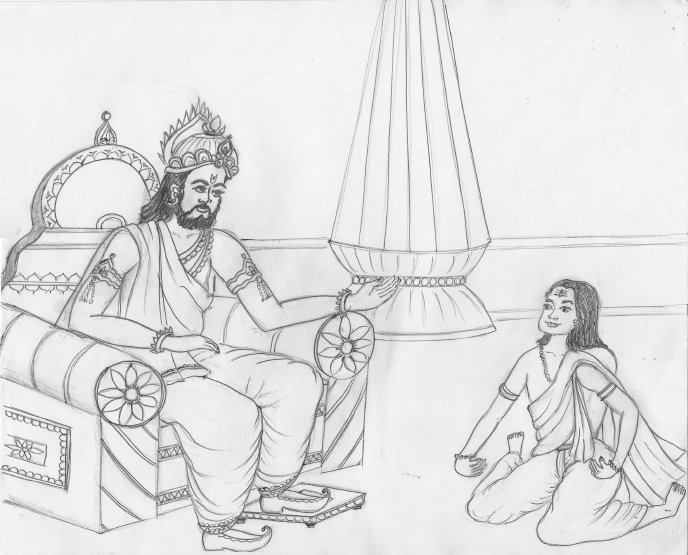
Ashtavakra was born into this world with his body bent in eight places. According to legend, while still in his mother’s womb, he heard his father making mistakes while chanting sacred verses. Unable to stay silent, the unborn child corrected his father. Angered by this, a curse was placed upon him, causing him to be born deformed, bent in eight places, hence the name Ashtavakra.
But here’s what makes this story powerful: Ashtavakra’s twisted body became a living symbol. It showed that outer appearance means nothing when it comes to inner truth. Society might judge based on how someone looks, but wisdom lives beyond the surface.
King Janaka had everything a person could want by worldly standards. Power, wealth, respect, a kingdom that prospered. Yet he felt something was missing. He had learned from many teachers, studied many texts, but deep satisfaction eluded him.
When Janaka met the young, physically imperfect sage, he didn’t see deformity. He saw clarity. And he asked the question that would unlock one of philosophy’s most direct teachings: “How can I attain knowledge, freedom, and peace?”
Ashtavakra’s answer was immediate and absolute: “You already are that which you seek. Simply recognize it.”
What the Ashtavakra Gita Actually Says
The central message of the Ashtavakra Gita can be stated simply, though its implications are vast:
You are not your body. You are not your thoughts. You are not your emotions or your memories or your story. You are the awareness that witnesses all of these things.
This awareness has always been free. It has never been bound. The sense of being trapped, limited, or incomplete is just a case of mistaken identity. You’ve been looking at yourself through the wrong lens.
Consider one of the most quoted verses from the text:
“You are neither earth nor water, neither fire nor air nor space. You are awareness itself, the witness of all these elements.”
Think about what this means in practical terms. Right now, you’re aware of reading these words. You’re aware of thoughts arising in your mind. You might be aware of sensations in your body or sounds in your environment.
But here’s the key insight: if you can observe your thoughts, you cannot BE your thoughts. If you can watch your emotions come and go, you cannot BE your emotions. There’s a part of you that remains untouched, unchanged, always present while everything else flows past.
That unchanging awareness is what you truly are, according to Ashtavakra. And it has never been in trouble.
Another verse cuts even deeper:
“He who sees himself as free is free. He who sees himself as bound is bound.”
This might sound too simple to be true. But the Ashtavakra Gita suggests that our bondage exists only in our belief about ourselves. We think we’re limited, so we experience limitation. We believe we need liberation, so we feel trapped.
Freedom isn’t something you achieve in the future. It’s what you are right now, underneath your assumptions about yourself.
The Philosophy: Truth Without Sugar-Coating
The Ashtavakra Gita belongs to a school of thought called Advaita Vedanta, which means “non-dualism.” But even within that tradition, this text stands out for its uncompromising directness.
Most spiritual teachings give you a path: do these practices, follow these steps, accumulate merit, purify yourself, and eventually you’ll reach the goal.
The Ashtavakra Gita takes a different approach. It says there is no path because there’s no distance between you and what you’re seeking. You don’t need to become enlightened. You need to stop believing you’re not.
No rituals needed. Ashtavakra doesn’t prescribe ceremonies or worship. External actions don’t touch your essential nature.
No effort required. In fact, effort is based on the assumption that you lack something. True understanding reveals you lack nothing.
No duality exists. There’s no separate “you” that will one day merge with the divine. There’s only one reality, appearing as many things.
This isn’t a teaching for accumulating spiritual accomplishments. It’s a teaching for letting go of the idea that you need any.
Liberation isn’t achieved. It’s recognized. It’s always been here, waiting for you to stop looking elsewhere.
Five Core Themes That Run Through the Text
1. Self-Realization: You’ve Been Free All Along
The text repeatedly emphasizes that bondage is imaginary. You’re like someone dreaming they’re in prison, then waking up to find they were always in their own bed. The chains were never real.
2. True Detachment: Not Renunciation, But Understanding
Many spiritual paths teach you to give up worldly things. The Ashtavakra Gita suggests something different: understand that you were never truly attached to begin with. When you know yourself as awareness, objects naturally lose their grip. You don’t have to force yourself to let go.
3. Witness Consciousness: The Observer That Never Gets Involved
Your body ages. Your thoughts change. Your circumstances shift. But there’s something in you that simply watches all of this happen without being affected by any of it. Finding that witness is finding your true home.
4. Natural Peace: Already Present, Just Covered Up
You don’t create peace through meditation or discipline, though those practices might help you recognize what’s already there. Peace is your natural state. Stress and anxiety are like clouds passing across the sky—real enough in their moment, but not the sky itself.
5. The Illusion of Separation: Why the World Looks the Way It Does
We see ourselves as separate individuals in a world of separate objects. The Ashtavakra Gita calls this a misperception. It’s not that the world doesn’t exist, but that its apparent separation from you is a trick of consciousness. When you see through this illusion, everything changes, even though nothing has actually changed.
The Student King: Why Janaka’s Role Matters
King Janaka’s participation in this dialogue is crucial to understanding its message.
Here was a man who ruled a kingdom. He had responsibilities, wealth, power, and duties. He couldn’t abandon his life to sit in a cave. Yet he achieved what the text calls complete freedom.
This shows that the Ashtavakra Gita isn’t asking you to renounce your life. You don’t need to quit your job, leave your family, or move to a monastery. The recognition it points to can happen anywhere, in any life situation.
Janaka’s humility is equally important. Despite being a powerful king, he sat before a young man with a deformed body and called him teacher. He looked past all superficial markers of authority and saw only truth.
In that moment, age didn’t matter. Physical appearance didn’t matter. Social status didn’t matter. Only the transmission of understanding mattered.
This is what makes their dialogue timeless. It’s not bound to a specific time, place, or type of person. It speaks to the essential nature that all humans share.
Two Sacred Texts, Two Different Approaches
People often compare the Ashtavakra Gita with the more famous Bhagavad Gita. Both are dialogues. Both deal with profound questions about existence and freedom. But they approach these questions from different angles.
The Bhagavad Gita meets you where you are. It acknowledges that you have duties, relationships, and a role to play in the world. It offers multiple paths—devotion, action, knowledge—and shows how each can lead to the same destination. Its tone is compassionate and practical. It holds your hand through the journey.
The Ashtavakra Gita doesn’t hold your hand. It shakes you awake. It says there is no journey because there’s nowhere to go. You’re already there. Its tone is direct, almost severe. It strips away every consoling story and points directly at truth.
The Bhagavad Gita is about spiritual evolution—growing, developing, and refining yourself over time.
The Ashtavakra Gita is about instant realization—seeing what has always been true but somehow overlooked.
Neither is better than the other. They serve different moments in a seeker’s journey. Some people need the gradual path. Others are ready for the direct pointer. And some people benefit from both at different times.
But if the Bhagavad Gita is about learning how to dance skillfully in the world, the Ashtavakra Gita is about recognizing the dancer was never real to begin with.
Words That Echo Across Centuries
Some verses from the Ashtavakra Gita have a way of stopping your mind in its tracks:
“You are the witness of everything, and in truth always free. What is there to renounce, and what is there to desire?”
Read that slowly. If you’re already free, what could you possibly need to give up? If you’re already complete, what could you chase after? The endless cycle of seeking and avoiding that dominates most lives reveals itself as unnecessary.
“The wise man delights in the self alone. He neither blames nor praises.”
When you know yourself as awareness itself, the whole drama of judgment falls away. You don’t need to condemn anyone, including yourself. You don’t need to praise anyone, including yourself. You simply are.
“The world rises like foam on the ocean. In this way, I am convinced all this universe arises from me.”
This verse points to something radical: the world appears within your awareness, not the other way around. You’re not a small creature inside a vast universe. The universe is an appearance within vast awareness, which is what you are.
These aren’t just nice-sounding spiritual sayings. They’re attempts to describe an actual shift in perception that’s available to anyone willing to look deeply enough.
Why This Ancient Text Matters Now More Than Ever
We live in an age of constant stimulation and perpetual dissatisfaction. Social media tells us we’re not attractive enough. Advertising tells us we don’t have enough. Self-help culture tells us we’re not accomplished enough.
The result? Anxiety has become the background noise of modern life. We’re tired of trying to fix ourselves. We’re exhausted from the endless self-improvement projects that never quite deliver lasting peace.
The Ashtavakra Gita offers something different. It doesn’t ask you to improve yourself. It suggests that the whole project of self-improvement is based on a misunderstanding.
You are not your stress. Stress happens in your experience, but you are the space in which that experience occurs.
You are not your story. The narrative you tell about who you are and what happened to you is just that—a story. It’s not your essential nature.
You are not your achievements or failures. These are events in time, while you are the timeless awareness witnessing them.
This teaching works as psychological liberation as much as spiritual awakening. When you realize you’re not the person you thought you were, the problems you thought defined you begin to lose their power.
Depression often comes from over-identification with our thoughts and circumstances. Anxiety comes from believing our thoughts about the future. The Ashtavakra Gita offers a way out: stop identifying with what passes and recognize what remains.
This doesn’t mean your problems magically disappear. It means you relate to them from a different ground. And that changes everything.
How to Approach This Teaching
The Ashtavakra Gita isn’t a book you read once for information. It’s a text you return to, letting its words work on you over time.
Some suggestions for engaging with it:
Read it slowly. One verse can be enough for a day’s contemplation. Don’t rush to accumulate knowledge. Let understanding arise naturally.
Question your assumptions. The text asks you to examine your most basic beliefs about who you are. This requires honest self-inquiry, not just intellectual agreement.
Notice the witness. Throughout your day, become aware of the awareness that’s aware. That simple noticing is the practice the text points toward.
Don’t force anything. The teaching emphasizes that freedom isn’t achieved through effort. Be gentle with yourself. Let insights emerge rather than demanding them.
Sit with the discomfort. Some of what the Ashtavakra Gita says will challenge your identity. That discomfort is actually a good sign—it means you’re touching something real.
The Invitation Still Stands
The Ashtavakra Gita doesn’t teach you how to become free. It reveals that you already are.
It doesn’t give you a spiritual identity to claim. It strips away all identities to show what remains when every label falls away.
It doesn’t promise you’ll reach enlightenment someday. It suggests that this present awareness, right here and now, is what you’ve been seeking.
This isn’t a comfortable teaching. It’s not meant to be. It’s meant to wake you up.
Thousands of years after that conversation between a twisted young sage and a searching king, their words still carry the same electricity. They still point to the same recognition.
You are not who you think you are. You are not the limited, separate, struggling person your thoughts describe. You are the vast, free, unchanging awareness in which all experience appears.
The cage has always been unlocked. You’ve been holding the key the whole time, looking at it and calling it something else.
The Ashtavakra Gita is an invitation to finally use that key, to step out of the imaginary prison, and to recognize the freedom that has always been your true nature.
Nothing needs to change. Everything changes when you see this clearly.
To read this text is to meet yourself before thought, before story, before the world convinced you that you were small.
That meeting is always available. The conversation between Ashtavakra and Janaka never really ended. It’s happening right now, in this moment, as you read these words.
The question is: are you ready to listen?
Disclaimer: I wanted to take a moment to clarify that some of the articles we have written are factually correct, supported by verified data and sources. These articles provide accurate information that our audience can rely on.
However, there are also articles that are based on personal opinions. While these pieces offer valuable insights and perspectives, it's important to recognize that they reflect the views of the authors and may not be universally applicable or agreed upon.