
Swasthani Brata Katha: Significance and Traditions in Nepal

Swasthani Bratakatha is a revered religious observance in Nepal, celebrated during the Magh month (January to February), particularly in the winter. The ritual honors Goddess Swasthani, who is believed to fulfill the wishes of her devoted followers, as well as Lord Madhav Narayan.
The Swasthani Brata for 2026 begins on January 3 and ends on February 1. This month-long spiritual practice is centered around the recitation of sacred stories that focus on the divine actions of Goddess Swasthani, Lord Shiva, and other gods. The Brata is traditionally observed from Paush Purnima to Magh Purnima, according to the Hindu calendar followed in Nepal.
Who is Goddess Swasthani?
Goddess Swasthani is often depicted as a four-armed deity, holding a chakra (wheel), trishul (trident), sword, and lotus in each hand. She is seated at the center, surrounded by the Ashta Matrika, a group of eight powerful deities: Mahakali, Vaishnavi, Brahmi Maheshwari, Kameshwari, Barahi, Indrayani, and Chamunda.
The legend surrounding Goddess Swasthani tells of her role in helping Goddess Sati, the wife of Lord Shiva, overcome her troubles. After Sati self-immolated at Daksha Yagna upon hearing her husband’s insult, Swasthani is said to have assisted her in reincarnating and ultimately reuniting with Lord Shiva.
During the observance, the Shree Swasthani Brata Katha—a sacred book detailing the goddess’s divine acts—is recited. The stories often center around devotees who, initially misguided and following the path of adharma (unrighteousness), are rescued by the goddess’s intervention.
The Swasthani Katha
The main theme of the Swasthani Katha revolves around the transformation of individuals who, through their devotion to the goddess, find redemption and fulfillment. In the early chapters, the narrative focuses on the struggles of Sati Devi, her suffering, and her eventual rescue by Swasthani. The stories emphasize the goddess’s supreme power and her significance in the Hindu pantheon.
The Rituals and Observances of Swasthani Brata
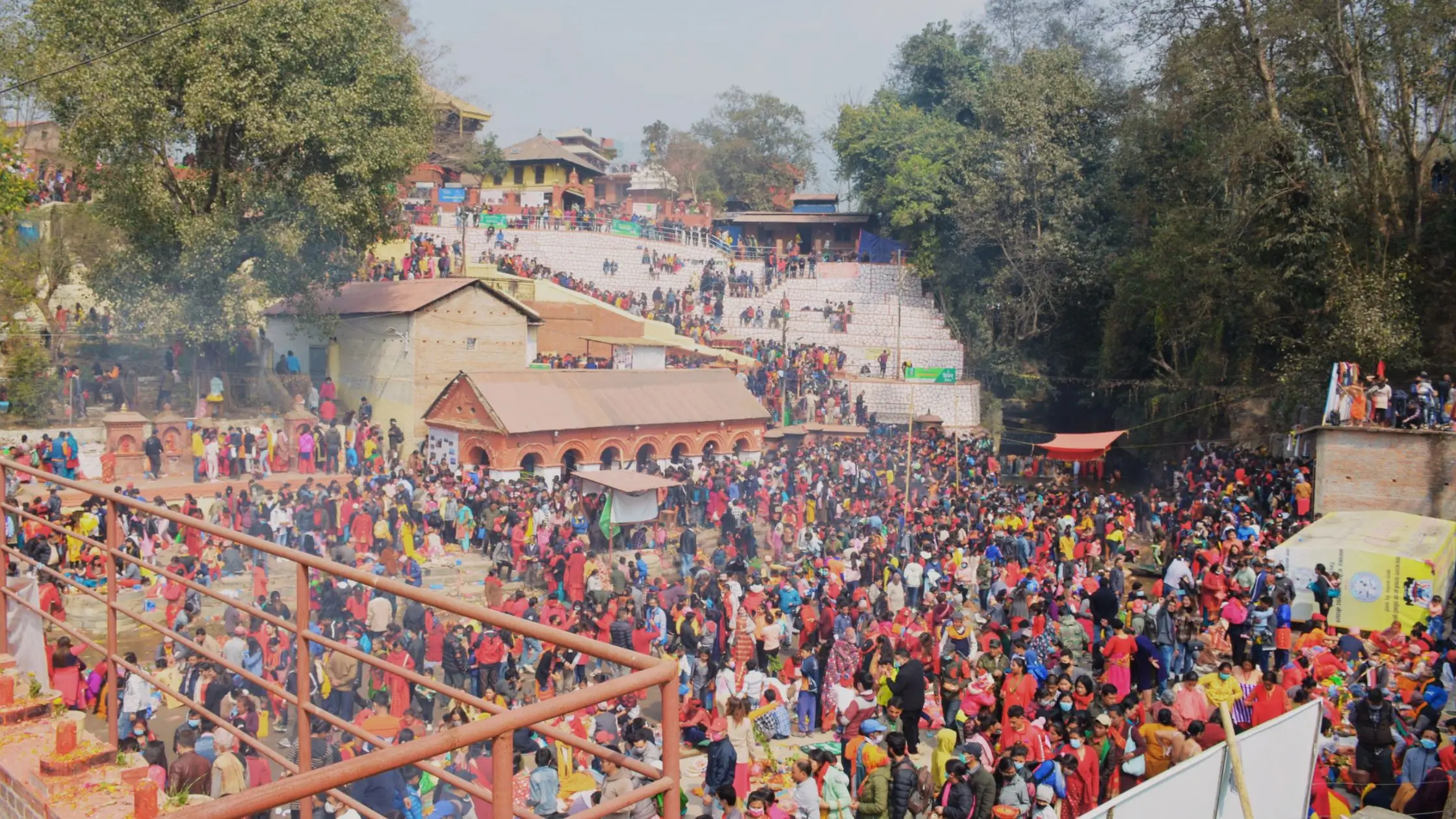
During Swasthani Brata, Hindu married women observe fasting (brata) for the well-being of their husbands, while unmarried women fast to seek a good husband. The ritual is observed by many for a full month, and participants typically wear red clothes and bangles, as red is considered a symbol of good fortune.
The Brata is observed along the banks of sacred rivers. In Kathmandu, the ritual is particularly significant at Salinadi, a river located in Sankhu. The festival is marked by morning or evening prayers and the chanting of hymns from the Shree Swasthani Brata Katha. Elders often narrate the divine stories, continuing the tradition uninterrupted throughout the month.
Participants wake early, take a ritual bath, and begin worshipping Goddess Swasthani with prayers and offerings. At the end of each day, the story of Swasthani’s divine actions is recited, and flowers and fruits are distributed to the listeners. The observance culminates with the creation of a Shivling (a symbol of Lord Shiva) on a copper plate, followed by the final prayers.
Fasting and Worship Practices
Devotees observe strict fasting during the Swasthani Brata, consuming only one meal a day. This practice is followed diligently for the entire month, with participants committing to the ritual for spiritual benefits.
Significance of the Sali River
The Sali River holds great religious importance during the Swasthani Brata. According to the sacred texts, the river is known for its healing and wish-fulfilling properties.
One of the most famous stories tells of a woman named Chandrawati, who overcame leprosy after worshipping Goddess Swasthani and bathing in the river. The river is also associated with the legend of King Nabaraj from the ancient kingdom of Labanya (now Sankhu).
Nabaraj became king after his mother observed the Swasthani fast. His queen, Chandrawati, contracted leprosy after offending the goddess, but her sincere repentance and worship of Swasthani led to her miraculous healing.
At the center of the Sali River, a large rock is worshipped as the symbol of Chandrawati’s healing, and it is a key site for devotees visiting the river during the Swasthani Brata.
Swasthani Bratakatha is more than just a month-long ritual; it is a celebration of faith, devotion, and the belief that Goddess Swasthani can bring healing, prosperity, and fulfillment to those who honor her.
The tradition is deeply rooted in Nepali culture and provides a sense of spiritual unity among communities, while fostering a deep connection to divine forces and the sacred nature of local rivers.
Disclaimer: I wanted to take a moment to clarify that some of the articles we have written are factually correct, supported by verified data and sources. These articles provide accurate information that our audience can rely on.
However, there are also articles that are based on personal opinions. While these pieces offer valuable insights and perspectives, it's important to recognize that they reflect the views of the authors and may not be universally applicable or agreed upon.